




Sens. Devlin Robinson, Vincent J. Hughes, and Steve Santarsiero
When the effort to restrict student cellphone use in schools first began two years ago, it was met with skepticism. Some thought it was unrealistic. Others worried it would create new enforcement headaches for teachers or intrude on parents’ ability to reach their children during the school day.
But since then, the conversation has shifted dramatically and decisively. What was once a fringe idea is now a mainstream movement.
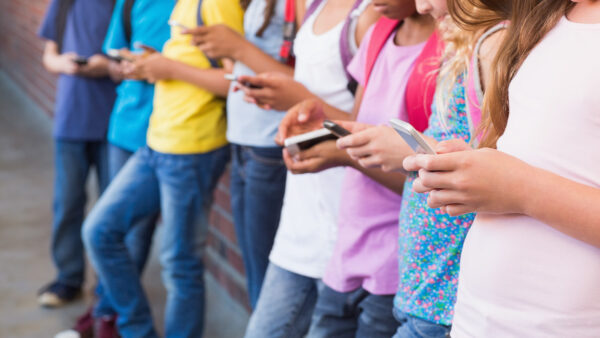
Across the country, more states are taking action to address the growing crisis of distraction, anxiety, and disconnection that smartphones have introduced into our classrooms.
Twenty-seven states now have laws restricting student cellphone use. Of those, 18 have enacted “bell-to-bell” bans, meaning phones must stay put away throughout the entire school day, including at lunch, between classes, and during study halls or other free periods.
The goal of these bell-to-bell bans is simple: restore focus, reduce anxiety, and create learning environments that prioritize engagement over endless scrolling.
Supportive teachers and parents
One reason the tide has turned is that educators themselves are demanding change. Just a year ago, the Pennsylvania State Education Association (PSEA), which represents more than 177,000 teachers and support staff across the commonwealth, was cautious about supporting a statewide cellphone policy. Today, they’re fully behind a ban.
They’ve seen firsthand how pervasive the problem has become. Teachers across Pennsylvania are spending valuable class time policing cellphone use, competing for students’ attention, and watching social media conflicts spill into the school day.
Many have told us it’s not just about distraction, but about culture. When students are glued to their screens, face-to-face communication, teamwork, and social development suffer.
“Mobile devices disrupt students from learning,” the organization’s vice president Jeff Ney said in testimony before the House Education and Health Committees. “Your average teenager gets 237 texts per day. Think about all those pings and how many they are getting during their seven hours at school while they are supposed to be learning.”
The PSEA’s support for a bell-to-bell policy marks an important turning point. It shows that this isn’t a political issue but a practical one. It’s about giving teachers the tools to do their jobs and giving students the space to learn in a healthier environment.
Public opinion has shifted, too. A large majority of the public is now on board. A 2025 Pew Research Center survey found that 74% of U.S. adults now support banning middle and high school students from using cellphones during class, up from 68% just last fall. That’s a six-point increase in a single year.
One possible reason is that parents are seeing the impact of constant phone use at home — shorter attention spans, sleep deprivation, and growing anxiety among their kids. Many of them are now calling for clear, consistent boundaries at school.
And it’s not just parents and teachers. The Pittsburgh Post-Gazette’s editorial board once questioned whether cellphone bans went too far. It recently called the combination of students and cell phones in school “a failed experiment” and called for the state to ban them.
Alarming data
The data on the mental health impacts of early smartphone use are alarming. A 2025 study published in the Journal of Human Development and Capabilities found that children who receive smartphones before age 13 are significantly more likely to experience serious mental health problems in early adulthood, including aggression, emotional instability, and suicidal thoughts.
The study adds to a growing body of research showing that excessive screen time interferes with healthy brain development, emotional regulation, and real-world social skills. Students who spend less time on their phones are not only performing better academically — they’re also reporting higher levels of happiness, confidence, and life satisfaction.
That’s the reason bell-to-bell policies — meaning students store their phones away for the entire school day — are so important, though some may wonder why a complete ban is necessary. The answer is simple: all time at school is learning time.
When students are in school, they’re still developing essential soft skills: communication, empathy, and collaboration. Those moments of informal connection are a crucial part of education.
Advocates for these policies, including teachers and psychologists, argue that if we only ban phones during class, we miss the bigger picture. Students need full, consistent boundaries to break the habit of constant phone checking and rediscover the value of being present.
“Students are socially isolated. They engage in more peer interaction via texts and apps than in-person interaction,” explain PSEA’s president Aaron Chapin, before the Senates Education Committee. “They walk down halls with their heads down, staring at screens, rather than actually mingling with classmates and friends.”
Chapin also noted that “Access to cell phones facilitates peer-to-peer cyber bullying. “As I said, children’s brains are still developing and they can’t always control their worst impulses when they have constant access to a device that can be used to easily relieve frustration or other feelings.”
Distracting phones
This issue is not about party politics, but about public health, education, and common sense. Everyone can agree that the distractions of social media and constant notifications have gone too far.
For years, the data has told us that smartphones are hurting students’ focus, relationships, and mental health. What’s different now is that the public, educators, and policymakers are finally aligned.
We’ve always had the facts on our side. Now with the tide of public opinion turning firmly in the right direction, the time for hesitation is over. Let’s implement bell-to-bell student cellphone use policies in Pennsylvania schools and free our kids and our classrooms from the grip of smartphones.
State Senator Devlin Robinson, a Republican, represents the 37th District, which includes parts of Allegheny County. Senators Vincent Hughes and Steven Santarsiero, both Democrats, represent districts in Philadelphia, Montgomery, and Bucks Counties.
The three have introduced Senate Bill 1014, “Phone-free Schools.” It has 19 co-sponsors, including Republicans and Democrats.